
Creativity
Education
Programs for Ages 2 to 14 | Micro-School Hyderabad & Pune
5 min read
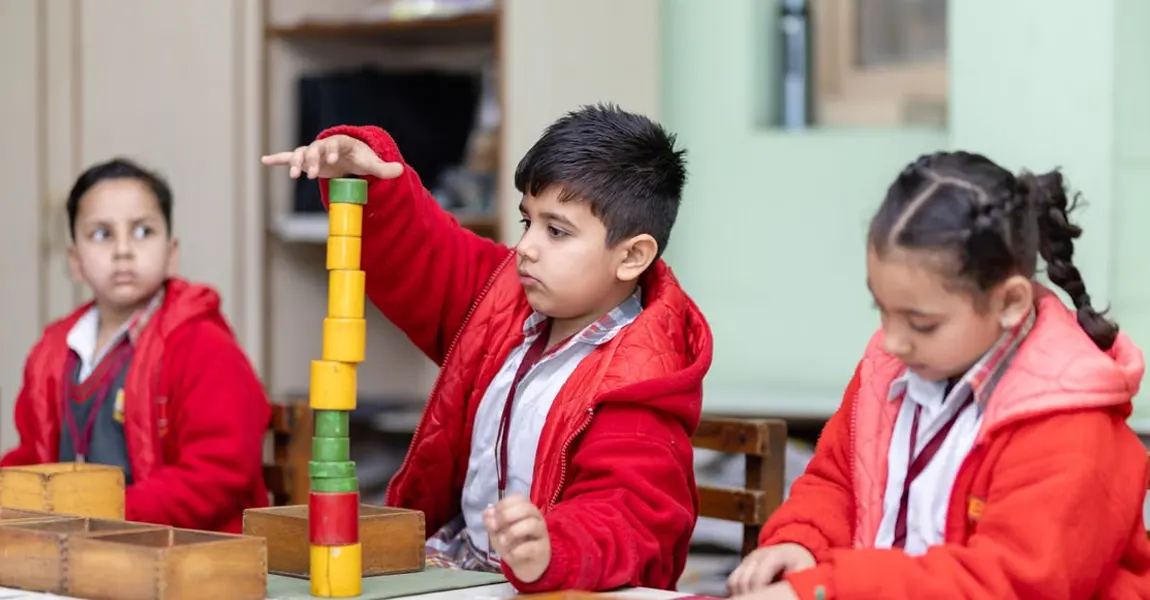
Choosing a school is difficult enough. Choosing which stage of a school your child should enter, when the names are unfamiliar and the ages overlap slightly with what you are used to, adds a layer most parents could do without.
This is a plain guide to the three stages at Dreamtime Learning Hub, what each one is genuinely trying to build, and the questions worth asking yourself before you decide.
Foundation Fantasy, roughly ages 2 to 6
The early years are not a preparation for school. They are the period in which a child forms their basic relationship with learning itself, and that relationship is difficult to repair later if it starts badly.
The Foundation Fantasy program concentrates on four things: exploring and problem solving, basic communication, expressing creativity, and self-understanding with empathy. In practice that looks like a great deal of play, a great deal of talking, and adults who treat a child's questions as the actual work rather than an interruption to it.
Parents comparing preschools in Jubilee Hills often focus on whether children are reading early. A more useful question is whether they are curious, whether they can express what they want, and whether they recover reasonably well when something goes wrong. Those three predict far more.
Elementary Utopia, roughly ages 6 to 11
This is the stretch where conventional schooling starts to squeeze. The syllabus thickens, the pace becomes fixed, and children begin sorting themselves into those who are good at school and those who are not.
The Elementary Utopia program is built around critical thinking, creativity and innovation, problem solving and emotional awareness. Academically, children work at their own level rather than their year group, with individual plans that move as they do.
What tends to matter most to families at this stage is that a child who is ahead is not made to wait, and a child who needs longer is not quietly written off. Both happen routinely in large classes, and neither is visible until much later.
Cosmic Middle Years, roughly ages 11 to 14
The early teens are when most children's curiosity drops away, and it is worth being blunt about why. Around this age, school stops being about finding things out and becomes about performance. Interest is a luxury the timetable can no longer afford.
The Cosmic Middle Years program is designed against that. The focus is resilience, self-directed learning, adaptability and an entrepreneurial mindset. Learners are expected to plan their own work, manage their own time, notice when an approach is failing and change it.
This is the stage where the earlier groundwork either pays off or does not. A child who has spent years being told exactly what to do struggles when handed responsibility at thirteen. A child who has been building that muscle since seven simply carries on.
A note on ages and overlap
The age bands are guides, not rules. Because learners work at the level that suits them rather than the level that matches their birthday, a child can sit at the boundary of two stages and take elements of both.
This matters more than it might seem. Children who have been unhappy at a previous school often arrive with uneven ground: strong in some areas, well behind in others, and carrying the belief that they are simply bad at the subject. Placement here follows the actual profile rather than the age on the form. Our approach page explains how this works day to day.
Learning from home
For families who travel, live away from either hub, or want to learn from home for their own reasons, there is a structured online option covering ages 3 to 15, run with the same philosophy and the same personalised design.
Some families combine the two across a year. Others use it as a bridge while relocating. It is worth asking about if a campus place is not practical for you right now.
Questions worth asking before you choose
• Where is your child actually working, subject by subject, rather than which year they are in?
• Has your child started to describe themselves as bad at something? When did that begin?
• How do they behave when work becomes hard, and do they have a way through it?
• Do they still ask questions at home about things nobody set them?
Honest answers to those four will usually point at the right stage faster than any age chart.
Choosing between the hubs
Both campuses run the same model with the same underlying philosophy, adapted to their spaces and communities. The Hyderabad hub in Jubilee Hills was the first, and continues to shape much of the practice. The Pune hub in Kalyani Nagar carries that forward with its own community of families and educators.
The practical decision is usually about location and commute, which matters more than families expect. A long daily drive undoes a good deal of the benefit of a calmer school day.
What happens next
Most families visit before deciding anything, and that is the sensible order. Seeing your child in the space, watching how they respond to a mixed age group and unfamiliar adults, will tell you more than any comparison table.
The admissions page sets out the process, timelines and what to bring. If you are not ready for that conversation yet, the brochure covers the programs in more detail and is a reasonable place to start.
Choosing a school is difficult enough. Choosing which stage of a school your child should enter, when the names are unfamiliar and the ages overlap slightly with what you are used to, adds a layer most parents could do without.
This is a plain guide to the three stages at Dreamtime Learning Hub, what each one is genuinely trying to build, and the questions worth asking yourself before you decide.
Foundation Fantasy, roughly ages 2 to 6
The early years are not a preparation for school. They are the period in which a child forms their basic relationship with learning itself, and that relationship is difficult to repair later if it starts badly.
The Foundation Fantasy program concentrates on four things: exploring and problem solving, basic communication, expressing creativity, and self-understanding with empathy. In practice that looks like a great deal of play, a great deal of talking, and adults who treat a child's questions as the actual work rather than an interruption to it.
Parents comparing preschools in Jubilee Hills often focus on whether children are reading early. A more useful question is whether they are curious, whether they can express what they want, and whether they recover reasonably well when something goes wrong. Those three predict far more.
Elementary Utopia, roughly ages 6 to 11
This is the stretch where conventional schooling starts to squeeze. The syllabus thickens, the pace becomes fixed, and children begin sorting themselves into those who are good at school and those who are not.
The Elementary Utopia program is built around critical thinking, creativity and innovation, problem solving and emotional awareness. Academically, children work at their own level rather than their year group, with individual plans that move as they do.
What tends to matter most to families at this stage is that a child who is ahead is not made to wait, and a child who needs longer is not quietly written off. Both happen routinely in large classes, and neither is visible until much later.
Cosmic Middle Years, roughly ages 11 to 14
The early teens are when most children's curiosity drops away, and it is worth being blunt about why. Around this age, school stops being about finding things out and becomes about performance. Interest is a luxury the timetable can no longer afford.
The Cosmic Middle Years program is designed against that. The focus is resilience, self-directed learning, adaptability and an entrepreneurial mindset. Learners are expected to plan their own work, manage their own time, notice when an approach is failing and change it.
This is the stage where the earlier groundwork either pays off or does not. A child who has spent years being told exactly what to do struggles when handed responsibility at thirteen. A child who has been building that muscle since seven simply carries on.
A note on ages and overlap
The age bands are guides, not rules. Because learners work at the level that suits them rather than the level that matches their birthday, a child can sit at the boundary of two stages and take elements of both.
This matters more than it might seem. Children who have been unhappy at a previous school often arrive with uneven ground: strong in some areas, well behind in others, and carrying the belief that they are simply bad at the subject. Placement here follows the actual profile rather than the age on the form. Our approach page explains how this works day to day.
Learning from home
For families who travel, live away from either hub, or want to learn from home for their own reasons, there is a structured online option covering ages 3 to 15, run with the same philosophy and the same personalised design.
Some families combine the two across a year. Others use it as a bridge while relocating. It is worth asking about if a campus place is not practical for you right now.
Questions worth asking before you choose
• Where is your child actually working, subject by subject, rather than which year they are in?
• Has your child started to describe themselves as bad at something? When did that begin?
• How do they behave when work becomes hard, and do they have a way through it?
• Do they still ask questions at home about things nobody set them?
Honest answers to those four will usually point at the right stage faster than any age chart.
Choosing between the hubs
Both campuses run the same model with the same underlying philosophy, adapted to their spaces and communities. The Hyderabad hub in Jubilee Hills was the first, and continues to shape much of the practice. The Pune hub in Kalyani Nagar carries that forward with its own community of families and educators.
The practical decision is usually about location and commute, which matters more than families expect. A long daily drive undoes a good deal of the benefit of a calmer school day.
What happens next
Most families visit before deciding anything, and that is the sensible order. Seeing your child in the space, watching how they respond to a mixed age group and unfamiliar adults, will tell you more than any comparison table.
The admissions page sets out the process, timelines and what to bring. If you are not ready for that conversation yet, the brochure covers the programs in more detail and is a reasonable place to start.
Admissions Open
Share Article


Hyderabad Campus | +91 6302138606
Dreamtime learning hub, Plot no 505, Road no 22, Jubilee hills, Hyderabad – 500033.
Pune Campus | +91 7207352288
Survey no 202A, plot no 4B, next to Shree Hospital, opp Aga khan palace, Kalyani Nagar, Nagar road, Pune – 411006.

hub@dreamtimelearning.com
Copyright © 2026 Dreamtime Learning Hub, All rights reserved.


Hyderabad Campus | +91 6302138606
Dreamtime learning hub, Plot no 505, Road no 22, Jubilee hills, Hyderabad – 500033.
Pune Campus | +91 7207352288
Survey no 202A, plot no 4B, next to Shree Hospital, opp Aga khan palace, Kalyani Nagar, Nagar road, Pune – 411006.
hub@dreamtimelearning.com
Resources
Get in touch
Copyright © 2026 Dreamtime Learning Hub, All rights reserved.
Hyderabad Campus | +91 6302138606
Dreamtime learning hub, Plot no 505, Road no 22, Jubilee hills, Hyderabad – 500033.
Pune Campus | +91 7207352288
Survey no 202A, plot no 4B, next to Shree Hospital, opp Aga khan palace, Kalyani Nagar, Nagar road, Pune – 411006.
hub@dreamtimelearning.com
Copyright © 2026 Dreamtime Learning Hub, All rights reserved.
