
Education
International Schools Near Me: Raising Independent Thinkers
5 min read
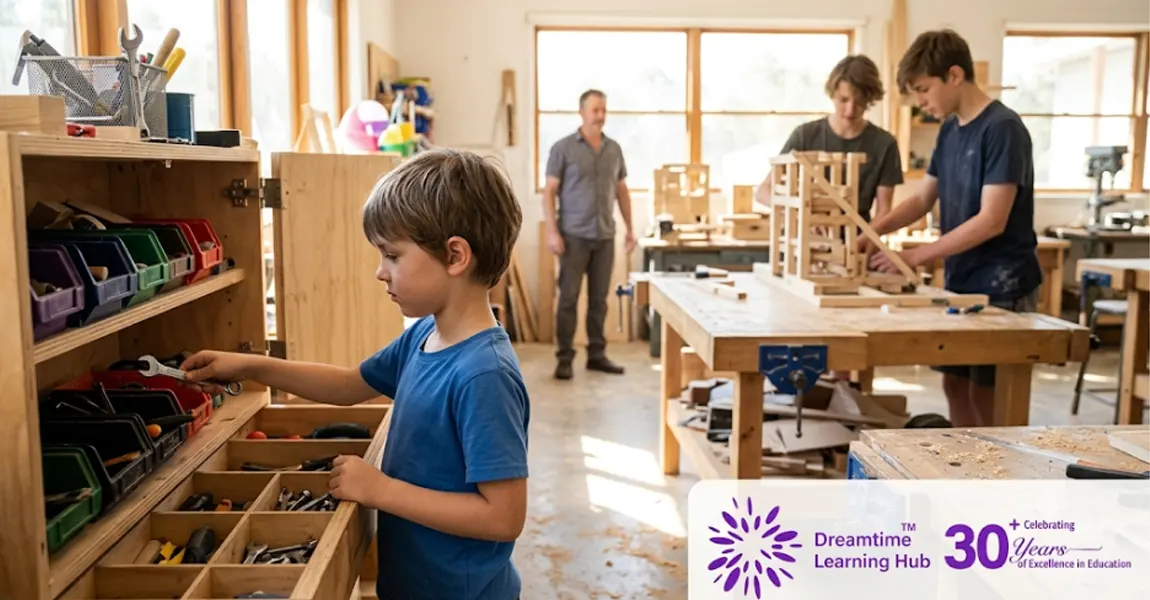
Search “international schools near me” in Hyderabad or Pune and the results look alike: curriculum names, fee bands, campus photos. What they rarely show is the thing that shapes a child most: what happens when no adult is giving instructions. That is where independence is built, or quietly trained out. This guide explains how a school’s environment shapes independent thinking, and what to watch for when you visit.
What does independence in learning look like at different ages?
Independence is not being left alone. It is making age-appropriate decisions with guidance close by, and the decisions grow with the child. For a four-year-old, it may be choosing an activity, tidying up and asking for help in words. For an eight-year-old, it is planning a small project, deciding the next step and noticing their own mistakes. For a twelve-year-old, it becomes setting goals, managing time and reflecting on what worked.
Dreamtime Learning Hub’s programmes follow this arc. Foundation Fantasy (ages 2 to 6) builds exploring and communication. Elementary Utopia (ages 6 to 11) focuses on critical thinking and problem solving. Cosmic Middle Years builds resilience and self-directed learning. Ask any school you visit how independence changes from one stage to the next.
How does a school’s environment shape student development?
An environment answers three questions without saying a word: who decides, what happens when you are stuck, and what happens when you are wrong. Rows of desks facing one adult answer them one way. Open workshops where children choose materials and revisit drafts answer them another way.
India’s own policy points in this direction. The National Education Policy 2020 says pedagogy should become more experiential, inquiry-driven and learner-centred. Research adds a caution. The Education Endowment Foundation advises that children should be explicitly taught how to plan, monitor and evaluate their learning. A good space helps, but it needs good teaching inside it. For a look at what the spaces hold, see our walkthrough of the Jubilee Hills learning spaces.

How can educators guide children without solving every problem for them?
The most useful phrase in an independent classroom is “What have you tried?” Strong educators ask questions before giving answers. They wait a few extra seconds before stepping in. They offer help in small steps and then withdraw it as the child gains confidence. They also praise the process, such as the planning and the persistence, not just the result.
Group structure helps too. At Dreamtime Learning Hub, classes typically have 10 to 15 learners in mixed age groups, with individual learning plans that adapt over time. Mixed ages give children peers to learn from, and small groups let educators notice when a child is struggling quietly. That is what lets an adult hold back without losing sight of the child.
What should parents look for during a school visit near them?
Visit on a normal working morning, not an open day, and watch what happens when nobody is performing. A school can describe independence beautifully on paper. Its rooms show whether the practice is real. Look for these signs:
Children can reach materials without asking permission each time.
Educators ask more questions than they give instructions.
Stuck children are given time, then a prompt, not an answer.
Drafts, plans and corrections are visible, not only finished work.
Children speak to adults with ease and eye contact.
Then ask one direct question: “How does a seven-year-old decide what to do next?” A clear, specific answer is a good sign. You can see both campuses in person, at the Hyderabad hub in Jubilee Hills or the Pune hub in Kalyani Nagar. Book through the contact page.
How does Dreamtime’s approach build independence?
The hub is a micro-school, not a large-campus school, and its model is built around the individual child. Learners progress at the level that matches their ability, benchmarked against flexible standards such as Cambridge Checkpoint or NIOS. Assessment draws on portfolios, observations, projects and reflections, not marks alone. Reflection is itself a habit of independence, because the child learns to judge their own work.
You can read more in our guides on personalised learning by level, not age and assessment without marks. Parents weighing a newer model should also ask direct questions about academic pathways and the transition to later stages. Our approach page explains how the structure works.
How can parents support independent learning at home?
Independence grows when children carry real responsibility. Offer choices within limits, such as which homework to start with or which dish to help cook. Let your child plan a weekend project and write down the steps. When they ask for help, try “What do you think?” before the answer. Resist rescuing them from small frustrations, because those are the practice.
End the day with a two-minute reflection: what went well, what was hard, what will you try tomorrow? Over months, this builds the planning-and-review habit that research links with stronger learning. Keep the tone light, and keep your own expectations realistic for your child’s age.
If you are comparing schools in Hyderabad or Pune, the most reliable test is to see a day unfold. Visit the hub, watch how children work, and ask your questions. When you are ready, start on the admissions page or get in touch.
Admissions Open · Enquire now
Search “international schools near me” in Hyderabad or Pune and the results look alike: curriculum names, fee bands, campus photos. What they rarely show is the thing that shapes a child most: what happens when no adult is giving instructions. That is where independence is built, or quietly trained out. This guide explains how a school’s environment shapes independent thinking, and what to watch for when you visit.
What does independence in learning look like at different ages?
Independence is not being left alone. It is making age-appropriate decisions with guidance close by, and the decisions grow with the child. For a four-year-old, it may be choosing an activity, tidying up and asking for help in words. For an eight-year-old, it is planning a small project, deciding the next step and noticing their own mistakes. For a twelve-year-old, it becomes setting goals, managing time and reflecting on what worked.
Dreamtime Learning Hub’s programmes follow this arc. Foundation Fantasy (ages 2 to 6) builds exploring and communication. Elementary Utopia (ages 6 to 11) focuses on critical thinking and problem solving. Cosmic Middle Years builds resilience and self-directed learning. Ask any school you visit how independence changes from one stage to the next.
How does a school’s environment shape student development?
An environment answers three questions without saying a word: who decides, what happens when you are stuck, and what happens when you are wrong. Rows of desks facing one adult answer them one way. Open workshops where children choose materials and revisit drafts answer them another way.
India’s own policy points in this direction. The National Education Policy 2020 says pedagogy should become more experiential, inquiry-driven and learner-centred. Research adds a caution. The Education Endowment Foundation advises that children should be explicitly taught how to plan, monitor and evaluate their learning. A good space helps, but it needs good teaching inside it. For a look at what the spaces hold, see our walkthrough of the Jubilee Hills learning spaces.
How can educators guide children without solving every problem for them?
The most useful phrase in an independent classroom is “What have you tried?” Strong educators ask questions before giving answers. They wait a few extra seconds before stepping in. They offer help in small steps and then withdraw it as the child gains confidence. They also praise the process, such as the planning and the persistence, not just the result.
Group structure helps too. At Dreamtime Learning Hub, classes typically have 10 to 15 learners in mixed age groups, with individual learning plans that adapt over time. Mixed ages give children peers to learn from, and small groups let educators notice when a child is struggling quietly. That is what lets an adult hold back without losing sight of the child.
What should parents look for during a school visit near them?
Visit on a normal working morning, not an open day, and watch what happens when nobody is performing. A school can describe independence beautifully on paper. Its rooms show whether the practice is real. Look for these signs:
Children can reach materials without asking permission each time.
Educators ask more questions than they give instructions.
Stuck children are given time, then a prompt, not an answer.
Drafts, plans and corrections are visible, not only finished work.
Children speak to adults with ease and eye contact.
Then ask one direct question: “How does a seven-year-old decide what to do next?” A clear, specific answer is a good sign. You can see both campuses in person, at the Hyderabad hub in Jubilee Hills or the Pune hub in Kalyani Nagar. Book through the contact page.
How does Dreamtime’s approach build independence?
The hub is a micro-school, not a large-campus school, and its model is built around the individual child. Learners progress at the level that matches their ability, benchmarked against flexible standards such as Cambridge Checkpoint or NIOS. Assessment draws on portfolios, observations, projects and reflections, not marks alone. Reflection is itself a habit of independence, because the child learns to judge their own work.
You can read more in our guides on personalised learning by level, not age and assessment without marks. Parents weighing a newer model should also ask direct questions about academic pathways and the transition to later stages. Our approach page explains how the structure works.
How can parents support independent learning at home?
Independence grows when children carry real responsibility. Offer choices within limits, such as which homework to start with or which dish to help cook. Let your child plan a weekend project and write down the steps. When they ask for help, try “What do you think?” before the answer. Resist rescuing them from small frustrations, because those are the practice.
End the day with a two-minute reflection: what went well, what was hard, what will you try tomorrow? Over months, this builds the planning-and-review habit that research links with stronger learning. Keep the tone light, and keep your own expectations realistic for your child’s age.
If you are comparing schools in Hyderabad or Pune, the most reliable test is to see a day unfold. Visit the hub, watch how children work, and ask your questions. When you are ready, start on the admissions page or get in touch.
Admissions Open · Enquire now
Admissions Open
Share Article


Hyderabad Campus | +91 6302138606
Dreamtime learning hub, Plot no 505, Road no 22, Jubilee hills, Hyderabad – 500033.
Pune Campus | +91 7207352288
Survey no 202A, plot no 4B, next to Shree Hospital, opp Aga khan palace, Kalyani Nagar, Nagar road, Pune – 411006.

hub@dreamtimelearning.com
Copyright © 2026 Dreamtime Learning Hub, All rights reserved.
Hyderabad Campus | +91 6302138606
Dreamtime learning hub, Plot no 505, Road no 22, Jubilee hills, Hyderabad – 500033.
Pune Campus | +91 7207352288
Survey no 202A, plot no 4B, next to Shree Hospital, opp Aga khan palace, Kalyani Nagar, Nagar road, Pune – 411006.
hub@dreamtimelearning.com
Resources
Get in touch
Copyright © 2026 Dreamtime Learning Hub, All rights reserved.
Hyderabad Campus | +91 6302138606
Dreamtime learning hub, Plot no 505, Road no 22, Jubilee hills, Hyderabad – 500033.
Pune Campus | +91 7207352288
Survey no 202A, plot no 4B, next to Shree Hospital, opp Aga khan palace, Kalyani Nagar, Nagar road, Pune – 411006.
hub@dreamtimelearning.com
Copyright © 2026 Dreamtime Learning Hub, All rights reserved.
